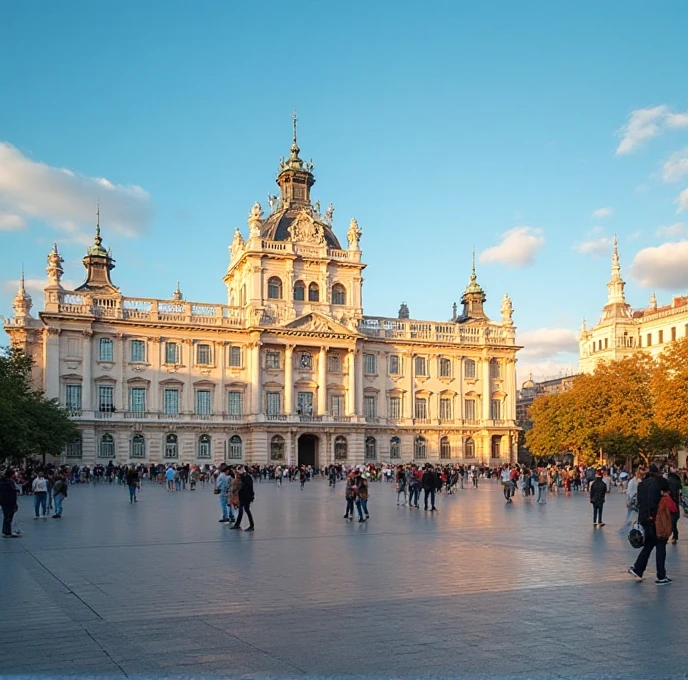
Royal Palace of Madrid – The Ultimate 2025 Travel Guide to Spain’s Grandest Royal Residence
The Royal Palace of Madrid (Palacio Real de Madrid) is one of the most impressive and elegant palaces in Europe. With more than 3,400 rooms, magnificent halls, priceless artwork, royal gardens, and a rich history, it stands as a symbol of Spain’s heritage and monarchy. Although Spain’s royal family no longer lives here, the palace is still used for state ceremonies, official banquets, and national celebrations.
This complete 2025 travel guide will help you discover everything about the palace: its history, interior rooms, art collections, royal armory, ticket information, best visiting times, photography spots, nearby attractions, and essential travel tips.
Let’s explore one of Spain’s most extraordinary landmarks.
1. Introduction – Why the Royal Palace Is So Famous?
The Royal Palace of Madrid attracts millions of visitors every year because:
-
It is the largest functioning royal palace in Europe
-
Its interiors are more luxurious than Versailles in France
-
It houses rare art collections, tapestries, sculptures, and historical weapons
-
Every hall reflects royal power and artistic mastery
-
It offers stunning city views and beautiful gardens
Whether you're a fan of architecture, history, art, or photography, this palace delivers a truly unforgettable experience.
2. History of the Royal Palace
The palace stands on the site of a former Moorish fortress, the Alcázar of Madrid.
2.1 The Fire of 1734
The old Alcázar burned down on Christmas Eve 1734, destroying centuries of artifacts.
2.2 Construction of the New Palace
King Philip V ordered a new palace inspired by the grandeur of European courts.
Construction began in 1738 and finished in 1755, although interior decoration continued for many years.
2.3 Architects Who Designed It
-
Filippo Juvarra
-
Giovanni Battista Sacchetti
-
Francesco Sabatini
Their combined styles created a palace that blended Italian, French, and Spanish influences.
2.4 Modern Use
While the royal family lives in the Zarzuela Palace, the Royal Palace is used for:
-
State ceremonies
-
Diplomatic receptions
-
Royal banquets
-
National Day celebrations
It remains a symbol of Spanish monarchy.
3. Exterior Architecture – A Masterpiece of Elegance
The palace exterior is built using white and gray stone, giving it a luxurious and powerful look.
Key Features:
-
Long symmetrical façade
-
Classical arches
-
Sculptures of Spanish monarchs
-
Grand central courtyard
-
Large windows and balconies
-
Beautiful iron gates
The architecture is a blend of Baroque and Neoclassical styles, best viewed during golden hour when the sunlight softens the stone texture.
4. Inside the Palace – Highlights of the Royal Interior
The palace interior is breathtaking from the moment you enter. It is filled with:
-
Crystal chandeliers
-
Silk-covered walls
-
Gold decorations
-
Marble floors
-
Frescoed ceilings
Here are the must-see rooms:
4.1 Grand Staircase (Escalera Principal)
One of the most famous features of the palace.
-
Made of a single block of San Agustín marble
-
Decorated with sculptures
-
Ceiling fresco by Corrado Giaquinto
This staircase makes an unforgettable first impression.
4.2 Throne Room (Salón del Trono)
The most iconic room in the palace.
Highlights:
-
Red velvet walls
-
Gold ornaments
-
Huge chandeliers
-
Mirrors and royal emblems
-
Two thrones placed under a magnificent canopy
-
Ceiling fresco "The Apotheosis of the Spanish Monarchy"
This is where kings once received guests and ambassadors.
4.3 Royal Armoury (Real Armería)
One of the finest collections of armor and weapons in the world.
Items include:
-
King Charles V’s armor
-
Lances, shields, and swords
-
Medieval armor for horses
-
Crossbows and firearms
-
Military uniforms
Everything is preserved in perfect condition.
4.4 Hall of Columns (Salón de Columnas)
Used for modern state ceremonies.
-
Marble columns
-
Gold decorations
-
Famous tapestry collection
This hall reflects Spain’s grandeur.
4.5 Royal Kitchens (Cocinas Reales)
One of the best-preserved historic kitchens in Europe.
You can see:
-
Old copper pots
-
Huge stoves
-
Vintage cooking tools
These kitchens once served royal banquets.
4.6 Royal Dining Room
A long hall used for official dinners.
Seats up to 144 guests, including world leaders and ambassadors.
4.7 Porcelain Room
Walls completely covered in hand-painted porcelain plates and sculptures.
This room alone is worth the visit because of its unique design.
4.8 Gasparini Room
A masterpiece of Rococo style with gold and pastel decorations.
5. Art and Collections
The palace houses works from artists like:
-
Goya
-
Velázquez
-
Caravaggio
-
Rubens
-
El Greco
Other collections include:
-
Tapestries
-
Luxurious clocks
-
Violins by Stradivarius
-
Rare historic documents
Every room offers something extraordinary.
6. Palace Gardens – Peaceful Royal Retreats
The palace has several gardens:
⭐ 6.1 Sabatini Gardens
Right below the palace.
Perfect for:
-
Evening walks
-
Photography
-
Relaxing near fountains
⭐ 6.2 Campo del Moro Gardens
Located behind the palace.
Features:
-
Thick green forests
-
Peacocks roaming freely
-
Beautiful pathways
⭐ 6.3 Plaza de Oriente
The open square in front of the palace.
Surrounded by:
-
Statues of ancient Spanish kings
-
Cafes and restaurants
-
Stunning views of the palace facade
7. Tickets & Entry Guide (2025)
✔ General Ticket Price:
€12 – €16
✔ Free Entry:
-
Mondays to Thursdays (Evening) for EU & Latin American citizens
-
Children under 5
✔ Opening Hours:
Summer: 10 AM – 8 PM
Winter: 10 AM – 6 PM
✔ Best Time to Visit:
-
Early morning
-
Late afternoon
-
Weekdays
✔ Audio Guide:
Highly recommended for understanding history.
8. Photography Tips
-
Best exterior shots: Plaza de Oriente
-
Best interior shots: Grand Staircase & Throne Room
-
Don’t use flash (not allowed)
-
Visit around sunset for warm light on palace walls
9. Nearby Attractions
After the palace, explore:
-
Almudena Cathedral
-
Plaza Mayor
-
Puerta del Sol
-
Temple of Debod
-
Gran Vía (shopping street)
All within walking distance.
10. Tips for Visitors (2025)
-
Book tickets online to avoid queues
-
Arrive early to explore without crowds
-
Wear comfortable shoes
-
Bring water, especially in summer
-
Cameras allowed but no tripods
-
Don’t touch artwork or exhibits
11. Why You Must Visit the Royal Palace
Because it represents:
-
Spain’s royal heritage
-
Extraordinary architecture
-
Priceless art collections
-
Majestic halls
-
Beautiful gardens
It offers a once-in-a-lifetime experience.
12. Conclusion – A Palace That Defines Royal Grandeur
The Royal Palace of Madrid is not just a historical building—it's a tribute to Spain’s rich legacy. Every room, every hallway, every fresco tells a story of power, culture, and artistry. Whether you're visiting Madrid for a day or a week, this palace deserves a top spot on your travel list.
It is truly one of the finest royal residences in the world.


💬 Comments
No comments yet.