Alhambra Palace Granada – The Ultimate Travel Guide to Spain’s Moorish Crown Jewel (2025)
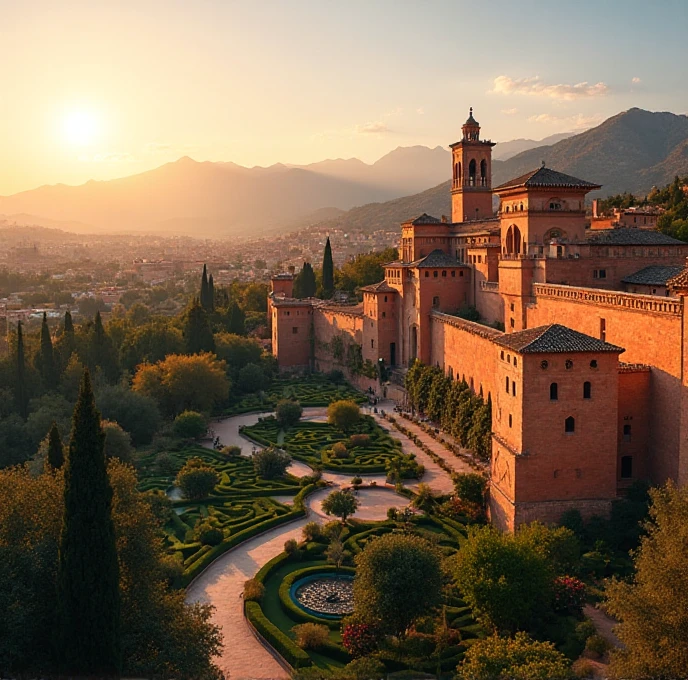
Few places in the world blend history, architecture, and natural beauty as perfectly as the Alhambra Palace in Granada. Perched high on Sabika Hill with the snow-capped Sierra Nevada mountains behind it, the Alhambra looks like something out of a dream. It is one of Spain’s most visited monuments and a UNESCO World Heritage Site known for its stunning Islamic architecture, royal palaces, poetic inscriptions, and spectacular gardens.
This 2025 travel guide explains everything you need to know before visiting: history, architecture, Nasrid palaces, Generalife gardens, best viewpoints, photography tips, ticket guide, visiting hours, and the best time to go.
Let’s dive into the magical world of Alhambra.
1. Introduction – Why Alhambra Is So Special
The Alhambra is more than a palace—it is a living museum of Islamic art, a symbol of Spain’s multicultural past, and one of the greatest architectural achievements of the medieval world.
Visitors love the Alhambra because:
-
It offers the most beautiful examples of Islamic palatial architecture in Europe
-
Its interior is filled with intricate carvings, arches, and tilework
-
The gardens feel like paradise on Earth
-
The views of Granada city are unforgettable
-
Every corner has a story and symbolism
For centuries, poets, artists, and travelers have described the Alhambra as “a pearl set in emeralds” because of its red walls surrounded by lush green gardens.
2. History of Alhambra – A Journey Through Time
The Alhambra has a long and fascinating history that spans over 800 years.
2.1 Origins
The hill where Alhambra stands was first occupied by Romans, then by Moors (Muslims who ruled southern Spain for centuries).
2.2 Nasrid Dynasty (1238–1492)
This was the golden age of Alhambra.
The Nasrid rulers built:
-
Royal palaces (Palacios Nazaríes)
-
Fortresses
-
Residential quarters
-
Mosques
-
Gardens
-
Baths
-
Administrative buildings
Every new ruler added something unique.
2.3 The Fall of Granada (1492)
The Christian Catholic Monarchs—Ferdinand and Isabella—conquered Granada, ending Muslim rule in Spain.
They preserved many of the structures but also added Christian elements.
2.4 Modern Era
The Alhambra suffered damage, abandonment, and earthquakes but was restored in the 19th and 20th centuries.
Today, it stands as one of the world’s most beautiful historical complexes.
3. Main Areas of Alhambra You Must See
The Alhambra is huge. A full visit takes 3 to 4 hours, sometimes more.
The complex includes three main sections:
-
Nasrid Palaces
-
Generalife Gardens
-
Alcazaba Fortress
Let’s explore each one in detail.
4. Nasrid Palaces – The Heart of Alhambra
The Nasrid Palaces (Palacios Nazaríes) are the jewel of the Alhambra.
These rooms were once home to sultans, royal families, ministers, and court poets.
They include:
4.1 The Mexuar
This was the hall used for administrative meetings and royal decisions.
The tilework, wooden ceilings, and carved plaster details show the beauty of Islamic rule.
4.2 Palace of Comares (Palacio de Comares)
Includes the grand Court of the Myrtles.
Water reflects the palace like a mirror—creating a stunning photo spot.
4.3 Hall of Ambassadors
The official throne room of the rulers of Granada.
The wooden ceiling has over 8000 pieces carved in geometric patterns.
4.4 Palace of the Lions (Palacio de los Leones)
This is the most iconic part of Alhambra.
It features:
-
The famous Lion Fountain, supported by 12 marble lions
-
The Courtyard of the Lions, symbolizing paradise
-
Four water channels representing the rivers of heaven
This area is the perfect example of Nasrid architectural genius.
5. Generalife Gardens – The Sultan’s Paradise Retreat
Generalife (Jannat al-Arif) means “Garden of the Architect” or “Gardens of Paradise.”
This was the summer residence of the Nasrid rulers.
Highlights include:
⭐ Patio de la Acequia (The Water Channel Courtyard)
A long water channel surrounded by flowers, fountains, arches, and greenery.
The sound of water creates a peaceful, heavenly atmosphere.
⭐ Upper Gardens
Offer beautiful views of Granada and the palace complex.
⭐ Olive Groves, Roses, Cypress Trees
These add natural beauty to the entire complex.
Generalife is one of the most romantic locations in Spain.
6. Alcazaba – The Old Military Fortress
This is the oldest part of Alhambra.
The Alcazaba includes:
-
Watchtowers
-
Soldiers’ quarters
-
Guardrooms
-
Defensive walls
The best part of the Alcazaba is the Torre de la Vela (Watchtower).
From here, you can see:
-
Entire Granada city
-
Sierra Nevada mountains
-
Albaicín historic neighborhood
It is one of the best viewpoints in Spain.
7. Architecture – A Masterpiece of Islamic Art
The Alhambra showcases perfect harmony between architecture, nature, and spirituality.
Key Design Elements:
✔ Stucco (plaster) carvings
✔ Arabic calligraphy
✔ Muqarnas (honeycomb ceilings)
✔ Geometric tilework
✔ Symmetry in windows and gardens
✔ Use of water as a symbol of purity
✔ Woodwork carved like lace
Every corner looks like a painting.
8. Alhambra Tickets & Entry Guide (2025)
Ticket Types:
-
General Ticket – Nasrid Palaces + Alcazaba + Generalife
-
Night Visit Ticket
-
Garden Ticket
-
Guided Tour
-
Audio Guide Ticket
Average Price:
€15 – €25 (depending on tour type)
IMPORTANT:
Entry to Nasrid Palaces has a fixed time slot.
If you miss it—you cannot enter.
Opening Hours:
Most of the year: 8:30 AM – 8:00 PM
Night visits: 10:00 PM – 11:30 PM
Best Time to Visit:
-
Early morning
-
Late afternoon (golden light)
-
Spring and autumn (pleasant weather)
9. Best Viewpoints (Miradors) of Alhambra
Granada is full of scenic viewpoints.
Some of the best places to photograph Alhambra:
⭐ Mirador de San Nicolás
The most famous viewpoint.
At sunset, Alhambra glows deep gold with snowy mountains behind it.
⭐ Mirador de San Cristóbal
Peaceful and less crowded.
⭐ Paseo de los Tristes
Perfect for romantic evening walks.
10. Photography Tips for Alhambra
-
Use wide-angle lens inside palaces
-
Sunrise and sunset are best for warm colors
-
Use reflection pools for symmetrical shots
-
Take close-ups of Arabic calligraphy
-
Night photography creates magical golden effects
11. Interesting Facts About Alhambra
-
The name “Alhambra” means “the red one” because of its red walls.
-
Over 2.7 million visitors come every year.
-
The walls contain poems written by ancient Arabic poets.
-
The entire design follows mathematical proportions.
-
It is one of the best-preserved Islamic sites in Europe.
12. Nearby Places to Explore
After visiting Alhambra, you can explore:
-
Albaicín (old Moorish neighborhood)
-
Granada Cathedral
-
Sacromonte Caves
-
Plaza Nueva
-
Sierra Nevada mountains
13. Tips for First-Time Visitors (2025)
-
Book tickets at least 1–2 weeks in advance
-
Carry water and wear comfortable shoes
-
Arrive early to avoid crowds
-
Keep minimum 3 hours for the full visit
-
Protect your camera from water spray in gardens
-
Respect restricted areas inside palaces
14. Conclusion – A Place That Feels Like a Dream
The Alhambra Palace is not just a monument—it is a journey into history, culture, art, and imagination. Every room, every arch, every garden tells a story of a glorious past. Whether you love photography, architecture, history, or nature, Alhambra offers an unforgettable experience that stays with you forever.
Visiting the Alhambra is like stepping into a living fairytale—a masterpiece created by human genius and preserved through centuries.

💬 Comments
No comments yet.